vídeo: palestra Mette Ramsgaard Thomsen - Modelling complexity: how the digital expands the material // Bartlett International Lecture Series 2014/15 (semana 09)

Mette Ramsgaard Thomsen // Bartlett International Lecture Series 2014/15 // from Bartlett School of Architecture on Vimeo.


//////////////////////////////////////////////////
Modelling complexity: how the digital expands the material
11.03.2015
//////////////////////////////////////////////////

Computation challenges our material traditions. Rather than understanding materials as categorised and static – the computation and calibration of material behaviour allows us to understand and design for the performative aspects of materials.

In this lecture Mette will show recent work from CITA's (Centre for Information Technology and Architecture) portfolio. She will present research into computational design with focus on material performance questioning how computational strategies such as learning algorithms and multi-scalar material modelling can provide new models for thinking our design space.

Mette Ramsgaard Thomsen is an architect working with digital technologies. Her research centres on the relationship between crafts and technology framed through 'Digital Crafting' as way of questioning how computation, code and fabrication challenge architectural thinking and material practices. Her work is practice lead and through projects such as The Rise, Shadow Play, Thicket, Strange Metabolisms and Vivisection she investigates the design and realisation of a behavioural space.

Mette is professor at the Royal Academy of Fine Arts, School of Architecture, where she heads CITA.

....

vídeo: palestra Michael Silver - Co-robotics, Composites and High-performance Computing // Bartlett International Lecture Series 2015/16 - (semana 05)

Michael Silver // Bartlett International Lecture Series 2015/16 // from Bartlett School of Architecture on Vimeo.


//////////////////////////////////////////////////
Co-robotics, Composites and High-performance Computing
20.01.16
//////////////////////////////////////////////////

Can architects contribute to the evolution of new tools and the construction systems used to make buildings? This lecture explores three emerging technologies and their design consequences.

Michael Silver teaches architecture at the University at Buffalo where he co-founded SMART, a multidisciplinary design community dedicated to the development of new ‘Sustainable Manufacturing and Advanced Robotic Technologies’. In collaboration with computer scientists and engineers, he continues to work at a variety of scales and has extensive experience in the production of furniture, digital construction systems and buildings. As an experimental collaborator, Michael is deeply committed to the precise alignment of advanced technology, critical theory, and architectural poetics. His work has been exhibited at the New Museum of Contemporary Art in Manhattan, the IDC in Nagoya Japan, and the National Building Museum in Washington D.C. He built his first working robot arm out of Scotch tape and Spirograph parts at the age of 14.

...

A palestra está com um áudio muito baixo, mas com uma boa caixa de som é possível acompanhar.

A parte mais interessante da palestra para mim foram as perguntas e respostas que começam após cerca de 30 minutos. Infelizmente nem todas é possível escutar quem está perguntando, mas algumas questões acerca das implicações sociais do possível desenvolvimento e implementação das tecnologias que foram levantadas (como co-robotics) e afirmações sobre o palestrante sobre aspectos de inteligência artificial robótica (onde ele sugere ler o artigo de 1974 What Is it Like to Be a Bat?)

(Talvez tenha sido particularmente interessante para mim agora, porque eu assisti essa semana passada o filme Ex Machina, que aborda justamente AI, e, para mim, deixou um pouco a desejar no sentido de roteiro/discussão)

documentário: The Century of the Self - Adam Curtis (2002)

Acabo de assistir três episódios do documentário produzido por Adam Curtis para BBC, The Century of the Self. O quarto e último deixo para amanhã pelo avançado da hora... Sugestão dessa série foi feita na aula de Teoría Crítica da Produção do Espaço Arquitetônico que eu cursei semestre passado. Realmente super interessante e recomendadíssimo.

EDIÇÃO: Terminei de ver no dia seguinte. A série toda é muito interessante, me deixou curiosa com o que seria a sequencia, já que o documentário já é relativamente antigo (14 anos atrás)

vídeo: palestra Adam Greenfield // Bartlett International Lecture Series 2015/16 - (semana 04)

Adam Greenfield // Bartlett International Lecture Series 2015/16 // from Bartlett School of Architecture on Vimeo.

//////////////////////////////////////////////////
Another City Is Possible: Practices of the Minimum Viable Utopia 25.11.2015 //////////////////////////////////////////////////

Adam Greenfield discusses alternatives to the current dominant conception of technologised urbanity, specifically four aspects involved in the production of networked urban environments from the bottom up: people making data, people making things, people making places and people making networks.

Adam Greenfield is author of Everyware: The dawning age of ubiquitous computing (2006), Against the smart city (2013) and The city is here for you to use (forthcoming from Verso). His practice Urbanscale is dedicated to design for networked cities and citizens. Previously a Senior Urban Fellow at LSE Cities, Adam now co-teaches on the Bartlett School of Architecture's MArch Urban Design cluster 'Architectures of Participation' with Usman Haque.

 ---

Palestra em uma linha similar da apresentação do Dan Hill, tratando da questão de Big Data e Smart Cities (e também com a palestra que eu assisti final do ano passado na UFMG com o professor Alessandro Aurigi)

Lightness - Italo Calvino

"Then we have computer science. It is true that software cannot exercise its powers of lightness except through the weight of hardware. But it is software that gives the orders, acting on the outside world and on machines that exist only as functions of software and evolve so that they can work out ever more complex programs. The second industrial revolution, unlike the first, does not present us with such crushing images as rolling mills and molten steel, but with "bits" in a flow of information traveling along circuits in the form of electronic impulses. The iron machines still existe, but they obey the orders of weightless bits." Italo Calvino - Six memos for the next millennium (p. 8)

The Catalogue - vídeo por Chris Oakley (2004)

Single-channel video
Year of Production: 2004
Duration: 5’ 30 ”

In The Catalogue Chris Oakley presents the scenario of a perfect world of consumption, where a video surveillance system films the interior of a department store in which the individuals, together with their data, become entities-identities traceable and transparent thanks to their personal data. The individuals are followed through the crowd by motion tracking and are given graphical labels that list their purchase habits and general information regarding themselves.

The Catalogue is a symbolic rendering of the logic of a computerized market research system, which classifies individuals using a wide variety of data in order to assess their buying power and their future needs. The identity of each individual is reduced to the analysis and prediction of his or her consumption habits. The title of the work highlights the fact that each individual who meets the automatic eye of the video camera is entered in a database, a catalogue in which each person must be assigned to predetermined categories, thus assuming his or her place in the system

-Franziska Nori, IDENTITÀ VIRTUALI

link para assistir ao vídeo

artigo: The Computer for the 21st Century - Mark Weiser

The most profound technologies are those that disappear. They weave themselves into the fabric of everyday life until they are indistinguishable from it.


link para o artigo completo

originalmente publicado em:
Scientific American - Special Issue on Communications, Computers, and Networks,
September, 1991

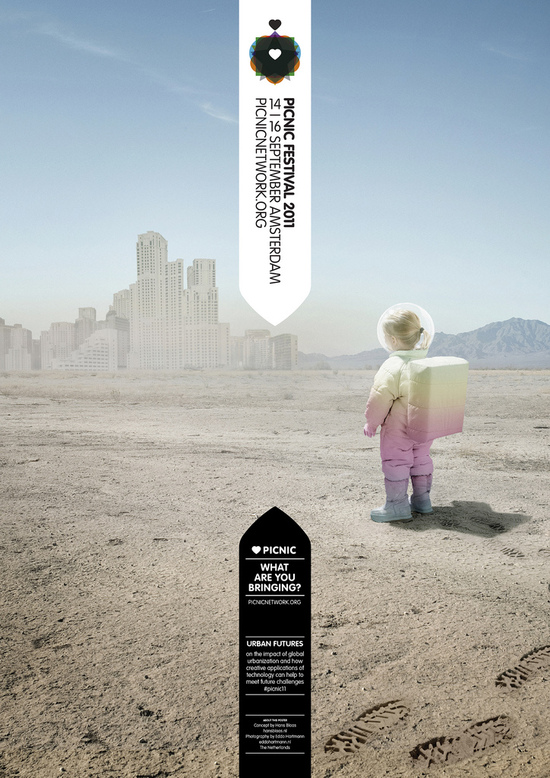
vídeo: Urbanizing Technology - Saskia Sassen / PICNIC Festival 2011

vídeo: Transmedia Design - Beth Coleman / PICNIC Festival 2011


Beth Coleman discusses critical aspects of the emergent (and emergently massive) fields of locative media and participatory design.

Coleman is the primary investigator of the Pervasive Media/City as Platform research and design lab at MIT, where she is an assistant professor of comparative media studies. She is a Berkman Center for Internet and Society Faculty Fellow at Harvard University and a Microsoft Research New England Research Fellow.

PICNIC Festival 2011 - Theme: Urban Futures


"The world is undergoing the largest wave of population growth in history: we are looking at more than 8 billion people in 2030 and essentially all of the growth will take place in the less developed countries, concentrated among the poorest populations in urban areas. By that time at least 70% of the world population will be living in an urban environment."

Investigating several urban future scenarios, including perspectives on:

Infrastructure
(mobility, sewage, utility grids, street plan, public transport, public and private buildings, public services)

Sustainability
(waste, water, green energy, pollution, Co2, building green, nano-tech, urban gardens, economy, bio-tech, food)

Society
(governance, open data, health, education, social cohesion, poverty, democratization, privacy, aging, immigration, safety)

Design
(city planning, architecture, health care, educational system, green, social change, data visualization, products, services)

Media
(urban screens, social media, gamification, trans media, augmented city, open versus closed, privacy, social engineering)

video: Wireless in the world


Wireless in the world 2 from timo on Vimeo.

Retematizando o blog, posto um vídeo de Timo Arnall, que representa uma visualização do invisível, ou seja, através do vídeo faz visível as tecnologias wireless no ambiente urbano. Essa estratégia busca através da visualização um melhor entendimento dessa camada de fluxos invisíveis que compõe nosso ambiente.

"This new urban landscape is no longer predicated solely on architecture and urbanism. These disciplines now embrace emerging methodologies that bend the physical with new measures, representations and maps of urban dynamics such as traffic or mobile phone flows. Representations of usage patterns and mapping the life of the city amplify our collective awareness of the urban environment as a living organism. These soft and invisible architectures fashion sentient and reactive environments."

vídeo: apresentação The Alphabet and the Algorithm - Mario Carpo


via: socks-studio

Por que designers deveriam aprender a programação

Muito legal esse videozinho de 4 minutos. Concordo com tudo isso.
Mais um estímulo pra não desistir de aprender a programar...

Prix Ars Electronica 2011

Está aberta a chamada de trabalhos para o Prix Ars Electronica 2011

Prix Ars Electronica é um dos mais importantes prêmios anuais no campo da arte interativa, eletrônica, da música e da animação e cultura digitais. Tem sido atribuído desde 1987 pela Ars Electronica (Linz, Áustria), um dos maiores centros mundiais para a arte e tecnologia.

(fonte: wikepedia)

nimbu

caderno da banca: concepção de uma forma de mediação


Encadernamento com duas colunas, relacionadas porém independentes.
Desdobramento de combinações, através do envolvimento.
Buscou ser um estímulo para a ampliação de interpretações mais livres e abertas desse trabalho/processo construído por fragmentos, momentos distintos, que conformaram uma rede de relações que não se estabelecem através de uma hierarquia, mas em uma organização distribuída, um fragmento a muitos fragmentos.


capa: adaptação do trabalho de León Ferrari - colagens com letraset, séries de reprodução heliográfica.

fotos banca final

tirando dúvidas sobre os ensaios antes da apresentação

Lino tomando notas com o caderno da banca

Outras duas fotos, registro do Marcelo Cabral, professor e fotógrafo oficial dos eventos e cotidiano do arqufsc :)

fotos banca final


Registros da apresentação para banca final feitos pela querida Juju Barbi, mais aqui.
 

Copyright 2010. All rights reserved.

Modern Clix by Rodrigo Galindez. Blogger template by Introblogger.